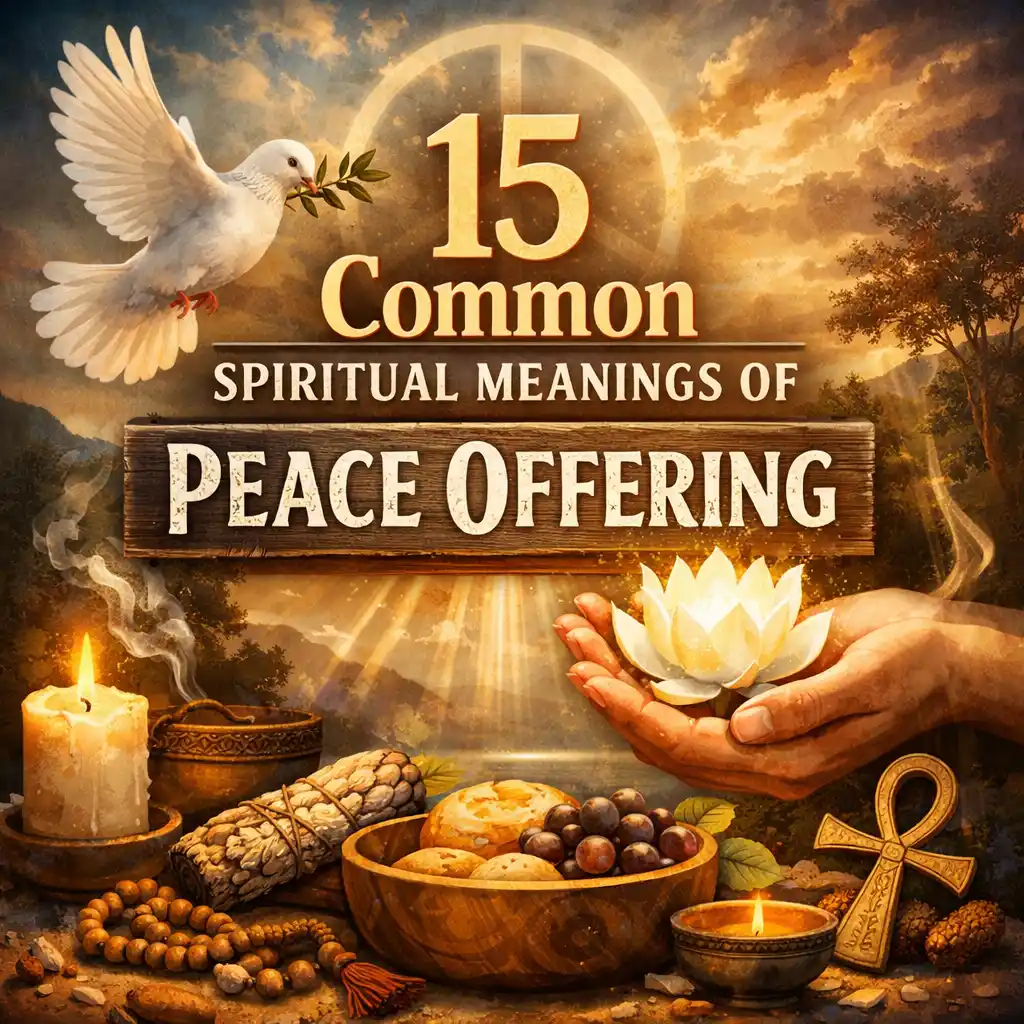
15 Common Spiritual Meanings of Peace Offering
A peace offering is more than just a simple gift or gesture it carries deep spiritual symbolism across many cultures and traditions.
Spiritually, it represents the desire to restore harmony, heal emotional wounds, and rebuild broken connections.
When someone gives or receives a peace offering, it often reflects humility, forgiveness, and a sincere wish for balance in relationships.
In this article, we will explore 15 common spiritual meanings of a peace offering and what this powerful act can reveal about inner growth and reconciliation.
The Connection Between Spirit and Peace Offering
A peace offering is far more than a symbolic gesture.
Rooted in spiritual traditions across the world, it represents a conscious decision to restore harmony, honor a higher power, and heal what has been broken within relationships, within communities, and within oneself.
Read Also: 15 Common Spiritual Meanings of Planet Alignment

1. Reconciliation With God
A peace offering is one of the most direct ways humans have sought to restore their relationship with the divine.
It signals a desire to close the gap between the sacred and the human, acknowledging that something was broken and choosing to make it right.
This act of spiritual reconciliation is not just symbolic — it is a genuine turning of the heart toward God.
2. Gratitude and Thankfulness
Offering peace in a spiritual sense often flows from a place of deep gratitude.
When someone has experienced blessing, healing, or protection, a peace offering becomes a heartfelt “thank you” directed toward the divine.
It transforms spiritual appreciation into a visible, tangible act of worship and devotion.
3. A Symbol of Covenant
In many spiritual traditions, a peace offering seals a covenant — a sacred agreement between a person and God, or between two people under God’s witness.
It marks a moment of commitment, signaling that both parties are bound together in trust, loyalty, and mutual respect.
4. Atonement and Forgiveness
A peace offering can serve as an act of atonement, acknowledging wrongdoing and seeking forgiveness.
It reflects the understanding that certain wounds — spiritual or relational — require more than words.
The offering becomes a physical expression of remorse, a bridge between guilt and grace.
5. Restoration of Broken Relationships
When conflict tears relationships apart, a peace offering signals the desire to rebuild.
Spiritually, this meaning emphasizes that peace is not passive — it must be actively pursued.
The act of offering something valuable demonstrates sincerity and a genuine willingness to let go of pride in favor of healing.
6. Dedication to a Higher Purpose
Giving a peace offering can also represent a personal act of dedication.
A person may offer something meaningful as a declaration that they are committing their life, talents, or resources to a greater spiritual purpose.
It is a moment of surrender — choosing something larger than personal ambition.
7. Expression of Worship
Peace offerings have long been woven into acts of worship across spiritual traditions.
They are a way of honoring the divine through action, not just words.
In this context, the offering itself becomes a prayer — a visible, physical form of reverence and spiritual devotion.
8. Seeking Divine Favor
Some peace offerings are made with the hope of inviting divine blessing into a specific situation.
This might involve a major life decision, a difficult transition, or a long-held prayer.
The offering communicates trust in a higher power and an openness to receiving guidance and grace.
9. Release of Spiritual Burdens
Making a peace offering can be a powerful act of spiritual release.
By giving something meaningful, a person symbolically lets go of guilt, grief, or resentment that has weighed on their spirit.
The offering becomes a turning point — a moment when the heavy load is handed over to the divine.
10. A Sign of Humility
Pride is often the root of spiritual disconnection. A peace offering counters this by requiring vulnerability and humility.
To offer peace is to admit that you do not have all the answers, that you need help, and that you are willing to set your ego aside.
It is one of the most honest spiritual acts a person can perform.
11. Invitation for Divine Protection
In many traditions, peace offerings are made to invite spiritual protection over a household, family, or community.
They signal that those making the offering recognize their need for divine covering.
The act becomes a form of spiritual declaration — a statement that safety and security are ultimately in God’s hands.
12. Acknowledgment of Spiritual Authority
A peace offering can represent an acknowledgment of God’s sovereignty and authority over all areas of life.
It is a way of saying, “I recognize that you are in control.”
This meaning is particularly powerful during times of uncertainty or crisis, when surrendering control feels most difficult.
13. A Prayer for Peace in the World
Peace offerings are not always personal. They can be made on behalf of others — communities, nations, or the world at large.
In this sense, the offering becomes an intercessory act, a spiritual prayer offered in physical form.
It reflects a heart that aches for collective healing and longs to see harmony restored in broken places.
14. Celebration of Spiritual Milestones
Some peace offerings mark moments of spiritual growth or achievement — a completed journey, an answered prayer, or a breakthrough in faith.
These celebratory offerings honor what God has done and set the tone for what comes next.
They transform personal victories into moments of communal spiritual reflection and joy.
15. Act of Surrender and Trust
Ultimately, a peace offering can mean complete surrender to divine will.
It is the act of laying down control, plans, and fears at the altar.
This meaning speaks to the deepest layer of spiritual trust — the belief that something greater is at work, and that peace comes from releasing, not holding on.
What Does a Peace Offering Mean in the Bible?
In the Old Testament, peace offerings (known as shelamim) were a specific type of sacrifice described in Leviticus.
They were unique because both the priest and the person making the offering shared in the sacrificial meal, symbolizing communion between God and humanity.
This shared meal represented restored fellowship and mutual participation in divine blessing.
How Peace Offerings Reflect Inner Healing
Making a peace offering is often a deeply personal act of inner work.
It signals a willingness to confront unresolved pain and actively choose healing over bitterness.
Spiritually, this process mirrors the inner journey of forgiveness — one that ultimately benefits the giver as much as the receiver.
The Role of Peace Offerings in Different World Religions
Across major world religions, gestures resembling peace offerings appear in various forms.
From Christian reconciliation rituals to Buddhist merit-making practices and Indigenous smudging ceremonies, the concept of offering peace to restore spiritual balance is nearly universal.
Each tradition reflects a shared human understanding that harmony must be consciously created.
Modern-Day Peace Offerings and Their Spiritual Relevance
A peace offering today might not involve a literal sacrifice, but the spiritual meaning remains unchanged.
Apologizing sincerely, returning something borrowed, or making a donation in someone’s honor can all carry the weight of a peace offering.
These everyday acts carry profound spiritual energy when performed with genuine intention and humility.
Conclusion
Peace offerings are one of humanity’s oldest spiritual languages. They speak of humility, healing, gratitude, and a longing for something greater than conflict and division.
Across the 15 meanings explored above, a clear theme emerges: peace is not found — it is chosen, cultivated, and offered freely.
If any of these meanings resonated with you, consider what kind of peace offering you might be called to make in your own life right now.
Frequently Asked Questions
What is the main purpose of a peace offering?
The main purpose of a peace offering is to restore harmony — with God, with others, or within oneself. It is a deliberate spiritual act that communicates a desire for reconciliation, forgiveness, and renewed connection. The offering demonstrates sincerity in a way that words alone often cannot.
What is the difference between a peace offering and a sin offering?
A sin offering is made specifically to atone for wrongdoing and seek forgiveness, while a peace offering is broader in purpose. Peace offerings can express gratitude, celebrate blessings, seal covenants, or simply honor the divine. Sin offerings focus on guilt; peace offerings focus on relationship.
Are peace offerings still relevant today?
Yes. While traditional sacrificial practices may no longer be common, the spiritual principles behind peace offerings are timeless. Acts of sincere apology, charitable giving, forgiveness, and service to others all carry the same spiritual weight as historical peace offerings when performed with genuine intention.
Can you make a peace offering on behalf of someone else?
Many spiritual traditions support the idea of intercessory offerings — giving on behalf of another person, family, or even an entire community. This reflects a heart of compassion and a recognition that our spiritual actions can have an impact beyond our own individual lives.